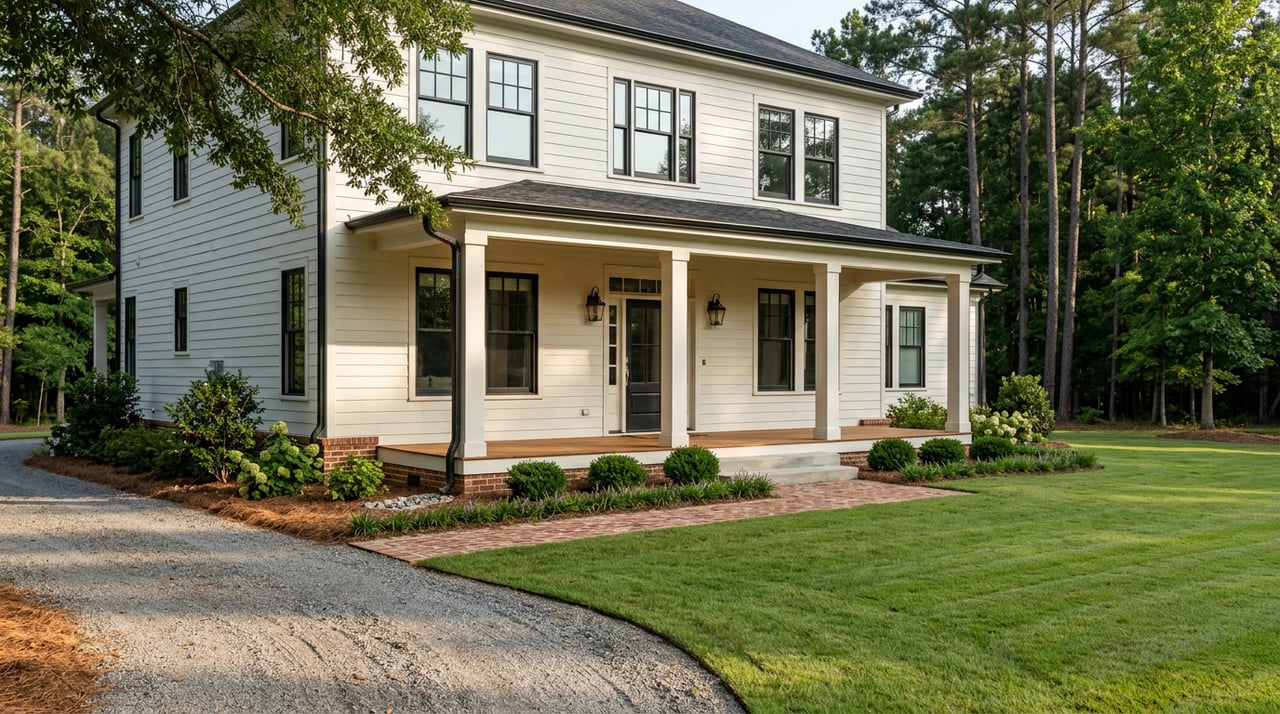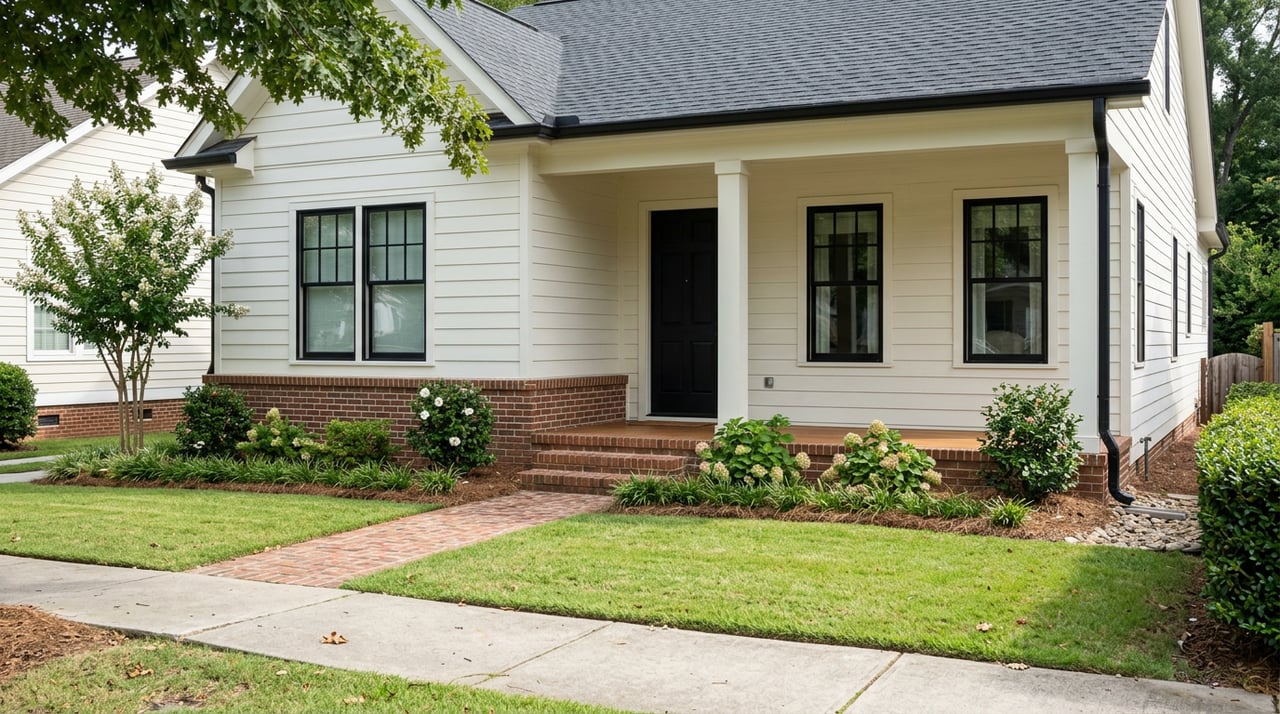
Two numbers describe the same city and they disagree. Zillow's home value index puts a typical West Columbia home at about $212,449 as of May 2026, up 6.0% year over year. Redfin's most recent closings tell a different story: a median sale price near $262,000 last month, up 7.1% year over year, with price per square foot up 23.5%. That is a $50,000 gap between what a valuation model believes the average home is worth and what buyers are actually paying to close.
The gap is the story. West Columbia is still one of the most accessible entry points in the Columbia metro, but a walkability premium is forming inside the city, and the median is no longer a useful shorthand for what your money buys. Where you land inside the 29169 and 29170 ZIP codes matters more than it did three years ago.
Why The Two Medians No Longer Agree
Automated valuation models like Zillow's ZHVI lean on the full stock of homes in an area, including older ranch homes on quiet interior streets that rarely trade. Sold medians reflect only the homes that closed last month. When a small pocket of a city starts producing disproportionate transactions at higher price points, the sold median moves first and the AVM catches up later.
That is what is happening on the east side of West Columbia. Homes within walking distance of State Street, the River District, and the Congaree waterfront are trading more often and at higher prices per foot than the interior neighborhoods off Sunset Boulevard. Across the metro, Columbia's overall ZHVI is up only 1.4% year over year on Zillow's May 2026 read, which makes West Columbia's 6.0% appreciation an outlier upward, not a metro-wide tide.
For a buyer, that means two things. Sold comps within a quarter mile of your target property will describe your market better than any city-wide chart. And the appraisal you get after going under contract may lag the price the neighborhood is currently supporting.
The Named Catalysts Behind The Spread
The pressure on the east side is not abstract. It traces to specific public and private projects that are either underway or funded.
- The Meeting Street road diet. West Columbia has invested $7.5 million to take Meeting Street from four lanes to two, adding pedestrian safety improvements and streetscape work through the entertainment core. A narrower, calmer Meeting Street changes what a home two blocks off it feels like to own.
- The Mohawk Drive pedestrian bridge. Mayor Tem Miles confirmed in early 2026 that planning continues on a pedestrian bridge over the Saluda River off Mohawk Drive next to the Riverbanks Botanical Gardens, which would connect West Columbia directly to the Columbia Riverwalk. Foot connectivity to the Riverbanks side is a value input the market has never had before.
- St Anns Alley. Spring Street Partners, formed by Joe Taylor, Mark James, and Tyler Baldwin, is building new detached single-family homes designed by Allison Ramsey Architects of Beaufort. Units run 1,100 to 1,600 square feet with two-and-a-half baths, small yards, and two parking spaces, positioned within walking distance of the River District and the Statehouse. New detached product this close to State Street sets a new comp shelf that did not exist a year ago.
- Wilson Company's Cromwell Street project. A proposed 27-home development deeper in the city core, away from the immediate riverfront but inside the walkability radius.
- Still Hopes expansion. Near the Cayce border, the retirement community is adding 200 units and a clubhouse. That is a demand engine for smaller homes and townhomes in the surrounding blocks as staff, families, and downsizers land nearby.
- Sunset Boulevard sewer infrastructure. The city reports the corridor sewer project is complete, which quietly unlocks commercial and higher-density residential capacity along a corridor that had been constrained.
Not every project raises every home's value. The Meeting Street work benefits blocks that touch it. The Mohawk bridge benefits homes with a walkable line to Mohawk. Reading a listing now means asking which catalyst it actually sits inside.
What A Similar Budget Buys In Different Pockets
Consider three roughly equivalent buyer budgets and where each currently lands inside West Columbia. Figures are based on the sold data cited above and current new-construction pricing from area builder listings.
| Budget | River District side (near State St, Meeting St, Brookland) | Interior blocks (off Sunset, Augusta Rd corridors) | Outer subdivisions (toward Airport, I-26) |
|---|---|---|---|
| Around $200K | Older 2 bed / 1 bath cottage needing work, small lot | 3 bed / 2 bath ranch, updated, mid-century | Entry-level new construction starting near $189,900 |
| Around $260K | Renovated bungalow near walkable retail | Larger updated ranch or split-level, mature yard | Newer 3 bed / 2 bath, larger square footage, HOA amenities |
| Around $325K+ | New infill single-family in the St Anns Alley footprint, walkable to River District | Fully renovated older home with additions | Upper-tier new construction, 4 bed, larger lot |
The same money buys walkability on one side, square footage on the other, and newness on the third. None of those is objectively better, and each carries a different resale profile depending on which catalysts mature on schedule.
The Transaction Friction This Creates
Sellers on the east side are seeing offers arrive at numbers the neighborhood supports but the appraisal district has not fully absorbed. Buyers are being asked to bring appraisal-gap coverage into offers on homes that would have appraised cleanly two years ago. That is a real closing-table issue worth planning for before you write, not after.
A few practical implications worth naming:
- Comp radius matters more than usual. A comp four blocks in the wrong direction can miss the walkability premium entirely, or overstate it if you're not on that side.
- Days on market are still moderate. Redfin puts West Columbia at roughly 50 days in the most recent read, with average homes closing about 2% below list. That is not a bidding-war market. It is a market where accurately priced homes on the right blocks move and mispriced homes sit.
- New-construction comps and resale comps are not interchangeable. St Anns Alley pricing will influence, but not dictate, what a 1960s bungalow three streets over is worth.
- Rezoning is active. The Spring and South Witt triplex approval in February 2026 signals that City Council is willing to consider incremental density in interior neighborhoods, which affects long-run value but not this quarter's comps.
How To Read A West Columbia Listing In 2026
Before you fall in love with a photo, run the address through this quick test:
- Can you walk to State Street in fifteen minutes without crossing a stroad
- Does the property sit on a block that will be touched by Meeting Street streetscape work
- Is it inside the plausible walkshed of the Mohawk pedestrian bridge, once built
- Is the closest active new-construction comp within a quarter mile, or is it across town
- What did homes on this specific street sell for in the last six months, not the last two years
Two houses at the same list price can produce very different five-year outcomes depending on how they answer those questions.
Questions Worth Asking Before You Write An Offer
Is West Columbia still affordable compared to the rest of the metro? Yes, and by a meaningful margin. West Columbia and Cayce remain among the lowest median entry points in the Columbia MSA, and new construction is available starting near $189,900 in outer subdivisions. Affordability has narrowed, not disappeared.
Should I expect a bidding war? Generally no. The current Redfin read shows homes closing about 2% below list around 50 days on market. Renovated homes on the east side move faster, but the market overall gives buyers room to inspect, negotiate, and walk if terms do not fit.
Does the ZHVI or the sold median matter more for pricing an offer? Neither on its own. Ask your agent for closed sales within a quarter mile in the last 90 days, filtered to homes with similar walk access to State Street and the River District. That subset will price your offer better than any city-wide figure.
What about the pedestrian bridge, should I pay a premium today for a benefit that isn't built yet? Some of the premium is already in current pricing on the blocks nearest Mohawk Drive. Paying up meaningfully for a project that is still in planning is a personal risk call, not a market certainty.
Are the new infill homes on Center Street and near State Street a good comp for older homes nearby? Only partially. New construction carries its own price floor from land, materials, and builder margin. Older homes benefit from the neighborhood's rising desirability but rarely close at the same per-foot price as new build.
West Columbia's headline affordability is real, and so is the quieter re-sort happening block by block as the River District matures. If you're weighing an offer, planning a sale, or trying to decide whether to stretch for the walkable side, working through the specifics with someone who tracks these projects weekly matters more than another look at the metro average. When you're ready to talk it through, Marcy Glover is here to help. Let's connect.